
The Integrative Indigeneities Initiative

Charting a third path beyond both developmental hierarchy and romanticized idealization — toward a model of cultural change capable of holding developmental insight and multicultural appreciation at once.

Beyond Inherited Frameworks

The Integrative Indigeneities Initiative seeks to move beyond the inherited frameworks through which oral and tribal cultures have been positioned in developmental accounts of cultural evolution. Whereas modernist historiography has often tended to view such cultures as undeveloped or “primitive,” postmodern revisionism has tended in the other direction, toward romanticized idealization and exoticism. Each of these approaches has its own insights, yet each can also lean toward ideological oversimplification.

This initiative hopes to chart a more integrative third path. By convening a working group of indigenous and non-indigenous thinkers in sustained dialogue and metatheoretical construction, the project aims to explore longstanding conceptual tensions, attend to the historical wounds these debates have surfaced, and develop constructive tools toward a more comprehensive model of cultural change, development, and difference. The output will be a report on findings that works toward a new account capable of holding both developmental insight and multicultural appreciation without collapsing into either.

A farmer working the land — ways of life rooted in place and practice

A Troubled Relationship, and an Unfinished Response

The relationship between the human sciences and oral/tribal cultures has been troubled from the start, and integrative thought has yet to offer a broadly satisfying way through it. From its founding, the study of “other” cultures was bound up with the projects of empire — its categories shaped by conquest, its fieldwork conducted in the shadow of administration and mission, its findings used to rank the peoples of the world.

Modernist developmental historiography gave this arrangement a theoretical spine, treating oral and tribal cultures as evolutionarily primitive: earlier rungs on a single ladder of progress whose summit was, conveniently, the modern West. Such accounts have thus been deeply intertwined with the legacies of colonialism, imperialism, domicide, and genocide. In response, postmodern revisionist histories reacted against all of this with equal force.

Pole One

Modernist Developmentalism

Oral and tribal cultures are read as evolutionarily primitive — earlier rungs on a single ladder of progress. This framing erases genuine forms of indigenous complexity and dignity, and struggles to shed its hierarchical and ethnocentric inheritance.

Pole Two

Postmodern Revisionism

Tribal societies are presented as inherently enlightened, complex, contented, and connected to the earth, while Westerners emerge as the true barbarians of colonial history. This flattens difference into a moralized fantasy that often serves Western self-critique more than it serves indigenous peoples themselves.

Both positions capture something partial, and both distort. What unites them, beneath the apparent opposition, is a long failure of the human sciences to meet oral and tribal cultures on terms those cultures might recognize — a failure this initiative takes as its point of departure.

Unfortunately, approaches that have claimed to be integrative — integral theory, Spiral Dynamics, and the broader stream of evolutionary wisdom/spirituality — have too often reproduced rather than resolved this polarity, frequently leaning toward developmental hierarchy in ways that have rightly drawn criticism. This initiative takes that problematic history seriously as a starting point.

Four Connected Questions

The Integrative Indigeneities Initiative will synthesize insights across these traditions by asking a connected set of questions.

  1. How might we retain developmental and evolutionary theories alongside a robust multicultural appreciation?
  2. How might we nuance the complexification narrative to recognize multiple forms and vectors of complexity rather than a single axis?
  3. What metrics might allow us to account for these complexities so they are not silently excluded from the analysis?
  4. How might we hold a plurality of epistemologies (indigenous, Western scientific, etc.) as distinct yet not incommensurable, avoiding both developmental reductionism and radical relativism in a truly integrative effort at mutual enrichment and shared understanding?

Convening a working group operating in open dialogue and collaborative metatheoretical construction, the initiative will pursue answers that are both conceptually rigorous and ethically accountable, culminating in a published report aimed at a new, more comprehensive model.

A Field on a Fault Line

The study of cultural evolution sits on a fault line. On one side, developmental theories offer real explanatory power — they help us understand how forms of social organization, cognition, technology, and meaning-making have shifted and elaborated over time. On the other, the historical application of these theories to oral and tribal cultures has long been entangled with colonial violence, racial hierarchy, and the systematic denigration of peoples who did not resemble the modern West.

The result is a field caught between two unsatisfactory options: a developmentalism that struggles to shed its hierarchical and ethnocentric inheritance, and a relativism that, in refusing all comparison, surrenders the very tools needed to understand change and difference at all.

This impasse is especially acute for integrative movements, which have promised to honor the partial truths of every perspective yet have repeatedly been charged with privileging one pole of the polarity. The deeper problem is conceptual. Prevailing models tend to assume a single dimension of complexity, such that any culture must be located as “higher” or “lower” along one line.

They lack a vocabulary for the possibility that different societies elaborate complexity along different vectors — relational, ecological, linguistic, ritual, ethical, and cognitive — and that a culture spare along one axis may be extraordinarily developed along another. Without metrics sensitive to this plurality, whole forms of human achievement remain invisible to the account, and the old hierarchy reasserts itself by default.

Pluralize, Don't Abandon

The reduction of tribal cultures to “primitives” and their romanticization as noble sages are mirror images of the same error: each collapses a rich, multidimensional reality onto a single evaluative axis.

The Integrative Indigeneities Initiative begins from the conviction that the choice between developmental insight and multicultural appreciation is a false one. The path forward is not to abandon developmental theory but to pluralize it — to reconstruct the complexification narrative so that it can recognize multiple forms and vectors of complexity, and to build the metrics that make those forms legible rather than leaving them outside the analysis. In this frame, comparison becomes possible without ranking (or, at least, with a plurality of rankings), and difference can be honored without being mystified or denied.

Realizing this requires more than a new theory written about indigenous peoples; it requires a process of construction undertaken with them. The initiative will therefore convene a working group of indigenous and non-indigenous thinkers in open, sustained dialogue, treating metatheoretical construction itself as a shared and accountable practice. By holding different epistemologies in respectful tension, the working group aims to tackle conceptual confusions that have persisted for generations, to attend to the historical wounds these debates have inflicted, and to forge constructive tools for ongoing integrative indigenous dialogue. The deliverable is a report on findings that lays the groundwork for a new, more comprehensive model of cultural change, development, and difference.

The Working Group

The initiative convenes indigenous and non-indigenous thinkers in open, sustained dialogue, treating metatheoretical construction as a shared and accountable practice.

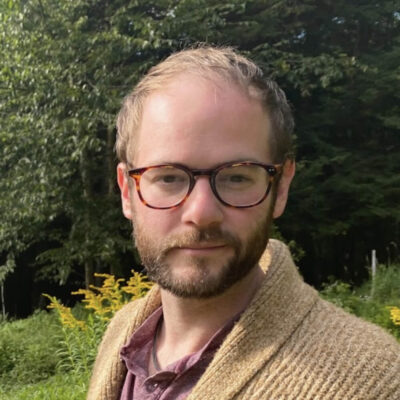
Brendan Graham Dempsey
Director of Research, Institute of Applied Metatheory

Director of Sky Meadow Institute and author of the seven-volume Metamodern Spirituality series. Holds degrees from the University of Vermont and Yale. His work bridges science and spirituality through the paradigms of emergence and complexity, and his research program applies measures of hierarchical complexity to the development of meaning-making in individuals and cultures.
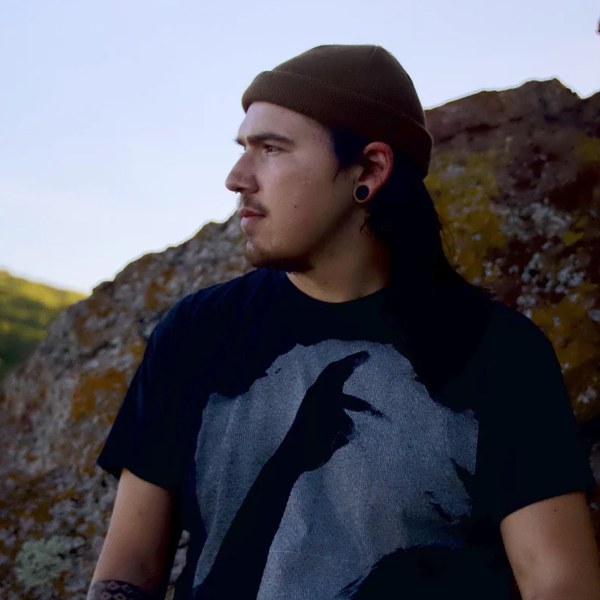
Timotéo Ikoshy Montoya II
Timotéo (Téo) Ikoshy Montoya II
Writer, Theorist & Multimedia Artist

An enrolled member of the Lipan Apache Band of Texas, whose work draws on Indigenous Futurisms and Indigenous knowledge systems to support an emerging world in crisis. He is pursuing an MFA in Creative Writing at the Institute of American Indian Arts while serving as Operations and IT Manager for Urban Native Era. He holds a B.A. in Cultural Anthropology from UC Santa Cruz, where his thesis explored the impact of colonization on Indigenous diets and health.

[email protected]
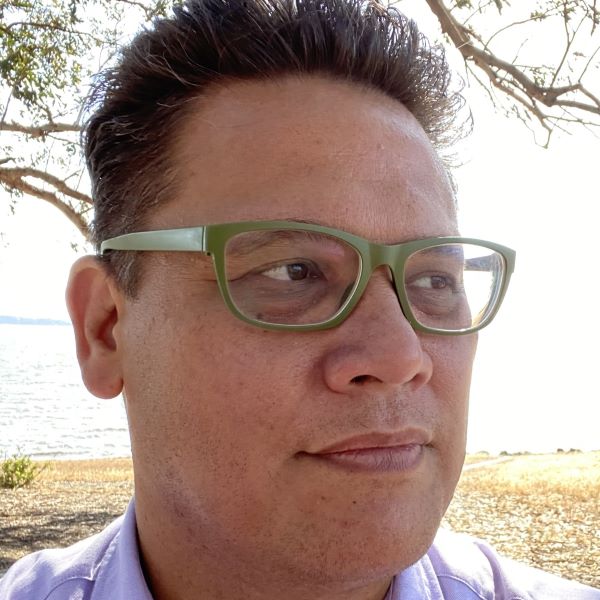
M. Rako Fabionar
M. Rako Fabionar
Executive Director, Innovative Learning and Living Institute

Co-founder of ILALI, which co-stewards Landwell — a 22-acre ancient wetland valley serving as a wayfinding place for regenerative living, cultural innovation, and community resilience. Across three decades he has built transformative learning environments in the public, private, and nonprofit sectors, integrating scientific, social, and sacred technologies. He has taught at Presidio Graduate School, started centers and undergraduate programs within the California State University system, and designed learning journeys for Indigenous communities, BIPOC change networks, and institutions including Esalen and Hollyhock. A founding member of Salmon Nation and the Guild of Future Architects, he holds a graduate degree in American Studies and is an initiated medicine man and elder in the Dagara lineage tradition.

Not a Peripheral Concern

How we understand oral and tribal cultures is not an academic curiosity confined to the history of ideas. It shapes whether indigenous voices are amplified or ignored, whether cross-cultural dialogue proceeds from respect or condescension, and whether the integrative movement can be trusted as a genuine partner rather than the latest inheritor of a colonial gaze. The credibility of evolutionary and integrative thought depends, in significant part, on its ability to face this question honestly and to do better than the frameworks that came before it.

If successful, this initiative will offer something neither modernist social evolutionary thought nor postmodern relativism has been able to provide: an account that takes development seriously without simplistic, biased comparison, and that takes cultural difference seriously without abandoning the search for mutual understanding.

At a moment when the planetary metacrisis calls for the full breadth of human knowing, recovering and rightly honoring the complexity of indigenous ways of life is not a peripheral concern but a central one.

The opportunity is to model what an integrative encounter across worldviews can actually look like when it is pursued with both rigor and care across different epistemological commitments.

Join the Conversation

Scholars, practitioners, and community partners interested in contributing to this working group — or to worldview research more broadly — are invited to be in touch.

Get involved